
Whether you’re training for a marathon, trying to improve your sleep, or simply want to stay more active throughout the day, a quality fitness tracker can be a powerful tool for reaching your health goals. These wearable devices have evolved far beyond simple step counters, now offering comprehensive health monitoring, including heart rate tracking, sleep analysis, stress management, and workout guidance.
This guide covers the best fitness trackers across every price point and use case, from budget-friendly bands under $50 to premium smartwatches with advanced coaching features. Every product has been researched for current availability so that you can purchase with confidence.
Quick Comparison Table
Product | Type | Battery Life | GPS | Heart Rate | Water Resistance | Price Range | Best For |
Fitbit Charge 6 | Band | 7 days | Built-in | Yes | 50m | $130-$160 | Best Overall |
Garmin Vivoactive 5 | Smartwatch | 11 days | Built-in | Yes | 50m | $250-$300 | Serious Athletes |
Garmin Forerunner 55 | Smartwatch | 14 days | Built-in | Yes | 50m | $150-$200 | Runners |
Apple Watch SE (2024) | Smartwatch | 18 hours | Built-in | Yes | 50m | $230-$280 | iPhone Users |
Samsung Galaxy Fit3 | Band | 13 days | Connected | Yes | 50m | $50-$70 | Android Users |
Xiaomi Smart Band 9 | Band | 21 days | Connected | Yes | 50m | $40-$50 | Best Budget |
Fitbit Inspire 3 | Band | 10 days | Connected | Yes | 50m | $80-$100 | Beginners |
Amazfit Band 7 | Band | 18 days | Connected | Yes | 50m | $40-$50 | Value Pick |
Garmin Vivosmart 5 | Band | 7 days | Connected | Yes | 50m | $130-$150 | Garmin Ecosystem |
WHOOP 4.0 | Strap | 5 days | No | Yes | Waterproof | $239/year | Elite Athletes |
Detailed Product Reviews
Fitbit Charge 6
Best Overall Fitness Tracker
Price Range: $130-$160

The Fitbit Charge 6 represents the sweet spot between a basic fitness band and a full smartwatch, offering comprehensive health tracking in a slim, wearable package. As Google’s flagship fitness tracker (Google now owns Fitbit), the Charge 6 integrates seamlessly with Google apps while maintaining Fitbit’s renowned health tracking accuracy.
Key Features:
- 24/7 heart rate monitoring with up to 60% improved accuracy during high-intensity workouts
- Built-in GPS for phone-free outdoor tracking
- SpO2 (blood oxygen) monitoring
- Skin temperature sensing
- Irregular heart rhythm notifications
- 40+ exercise modes with automatic exercise detection
- Google Maps, Google Wallet, and YouTube Music integration
- Active Zone Minutes with personalized heart rate zones
- Bright AMOLED touchscreen display
- Daily Readiness Score (with Premium)
Pros:
- Accurate heart rate tracking, especially during intense exercise
- Built-in GPS eliminates the need to carry a phone on runs
- Google ecosystem integration (Maps, Wallet, YouTube Music)
- Slim, comfortable design suitable for 24/7 wear
- Gym equipment heart rate broadcasting to compatible machines
- Includes 6-month Fitbit Premium trial
Cons:
- Some advanced features require a Fitbit Premium subscription
- Google Assistant support was removed
- No always-on display option
- Smaller screen than smartwatch alternatives
Best For: Anyone seeking a versatile, accurate fitness tracker with built-in GPS and comprehensive health monitoring without the bulk of a full smartwatch.
Garmin Vivoactive 5
Best for Serious Athletes
Price Range: $250-$300

The Garmin Vivoactive 5 bridges the gap between fitness tracker and sports watch, delivering premium health and training features in an elegant smartwatch form factor. With its bright AMOLED display, extensive health metrics, and Garmin’s industry-leading fitness ecosystem, the Vivoactive 5 is ideal for users who want comprehensive data without overwhelming complexity.
Key Features:
- 1.2-inch vibrant AMOLED touchscreen display
- Up to 11 days of battery life in smartwatch mode
- Built-in GPS with multiple satellite support
- Body Battery energy monitoring
- Advanced sleep tracking with Sleep Coach
- HRV (Heart Rate Variability) status
- 30+ built-in sports apps, including wheelchair activities
- Garmin Pay contactless payments
- Music storage for Spotify, Amazon Music, and Deezer
- Morning Report with daily wellness summary
- Women’s health tracking with pregnancy mode
- Free Garmin Coach adaptive training plans
Pros:
- Exceptional battery life for an AMOLED smartwatch
- Body Battery provides actionable energy insights
- No subscription required for any features
- Comprehensive Garmin Connect app with free training plans
- Comfortable enough for 24/7 wear, including sleep
- Excellent build quality with swim-proof design
Cons:
- Higher price point than basic fitness bands
- Learning curve for Garmin’s feature-rich interface
- No LTE connectivity option
- Third-party app selection is limited compared to Apple/Samsung
Best For: Fitness enthusiasts and athletes who want a full-featured GPS smartwatch with excellent battery life and Garmin’s trusted training ecosystem.
Garmin Forerunner 55
Best for Runners
Price Range: $150-$200

The Garmin Forerunner 55 is purpose-built for runners who want essential training metrics without the complexity of advanced sports watches. It combines accurate GPS tracking, daily suggested workouts, and PacePro race strategies in a lightweight, beginner-friendly package that punches well above its price point.
Key Features:
- Accurate GPS tracking with pace, distance, and interval data
- Daily suggested workouts based on training history and recovery
- PacePro pacing strategies for race day
- Estimated finish time predictions
- Cadence tracking
- 24/7 wrist-based heart rate monitoring
- Up to 2 weeks of battery life (20 hours in GPS mode)
- HIIT and breathwork activity profiles
- Body Battery energy monitoring
- All-day respiration tracking
- Recovery time advisor
- Connect IQ app store access
Pros:
- Outstanding battery life for a GPS watch
- Personalized daily workout suggestions
- PacePro helps execute race strategies
- Lightweight (37g) and comfortable for long runs
- No subscription required for any features
- Proven GPS accuracy from Garmin
Cons:
- No music storage or contactless payments
- Not swimproof (water-resistant only)
- Basic display compared to AMOLED alternatives
- Limited smartwatch features
Best For: Beginner to intermediate runners who want accurate GPS tracking, personalized training guidance, and exceptional battery life without paying for advanced features they won’t use.
Apple Watch SE (2nd Generation, 2024)
Best for iPhone Users
Price Range: $230-$280

The Apple Watch SE (2024) delivers the core Apple Watch experience at a more accessible price point, making it the ideal fitness tracker for iPhone users who want seamless integration with the Apple ecosystem. With watchOS 11, Fall Detection, Crash Detection, and comprehensive workout tracking, the SE offers tremendous value for Apple loyalists.
Key Features:
- watchOS 11 with enhanced workout metrics and personalization
- Retina LTPO OLED display (40mm or 44mm)
- Fall Detection and Crash Detection safety features
- Emergency SOS with international coverage
- Check-in feature to notify loved ones of safe arrival
- Heart rate monitoring with irregular rhythm notifications
- Comprehensive workout tracking with fitness rings
- Apple Fitness+ integration (3 months free included)
- Apple Pay contactless payments
- Find My device integration
- Family Setup for kids without iPhones
- 50m water resistance with swim tracking
Pros:
- Full Apple Watch experience at a lower price
- Seamless iPhone, iPad, and Mac integration
- Industry-leading safety features
- Excellent app ecosystem
- Apple Pay convenience
- Carbon neutral with select bands
Cons:
- Requires iPhone (no Android support)
- 18-hour battery life requires daily charging
- No always-on display
- No ECG or blood oxygen monitoring (available on Series 10)
- Temperature sensing not included
Best For: iPhone users who want a comprehensive fitness tracker and smartwatch with Apple’s ecosystem integration, safety features, and access to the Apple Watch app store.
Samsung Galaxy Fit3
Best for Android Users (Budget)
Price Range: $50-$70

The Samsung Galaxy Fit3 represents a major leap forward for budget fitness bands, offering a large AMOLED display, comprehensive health tracking, and up to 13 days of battery life at a fraction of the cost of smartwatches. For Android users seeking excellent value, the Galaxy Fit3 delivers premium features without the premium price tag.
Key Features:
- Large 1.6-inch sAMOLED display (46% larger than predecessor)
- Up to 13 days of battery life
- All-aluminum body with slim 9.9mm profile
- 100+ workout modes with 6 auto-detection options
- 24/7 heart rate and SpO2 monitoring
- Sleep tracking with Sleep Coaching
- Snoring detection (requires a paired Samsung phone)
- Stress tracking with guided breathing
- IP68 and 5ATM water resistance
- 100+ customizable watch faces
- Samsung Health app integration
- Smart notifications from an Android phone
Pros:
- Excellent display for the price
- Outstanding battery life
- Comprehensive health tracking suite
- Auto workout detection works reliably
- Slim, lightweight, and comfortable
- Affordable entry point to fitness tracking
Cons:
- Best features require a Samsung phone pairing
- No built-in GPS (uses connected GPS)
- Limited to Android devices
- No music storage or NFC payments
- An international model may lack a US warranty
Best For: Android users, especially Samsung phone owners, seeking a feature-rich fitness band with excellent battery life and display quality at a budget-friendly price.
Xiaomi Smart Band 9
Best Budget Fitness Tracker
Price Range: $40-$50

The Xiaomi Smart Band 9 continues Xiaomi’s dominance in the budget fitness tracker market, offering an impressive feature set at an almost impossibly low price. With its aluminum-alloy frame, 21-day battery life, and comprehensive health monitoring, the Smart Band 9 demonstrates that you don’t need to spend a fortune to track your fitness effectively.
Key Features:
- 1.62-inch AMOLED display with 1200 nits brightness
- Premium aluminum alloy frame (4 color options)
- Up to 21 days of battery life
- 60Hz high refresh rate display
- 150+ workout modes with advanced metrics
- 24/7 heart rate monitoring
- Continuous SpO2 (blood oxygen) monitoring
- Stress monitoring with breathing exercises
- Comprehensive sleep tracking
- Female health management
- 5ATM water resistance (50m)
- Bluetooth 5.4 connectivity
Pros:
- Exceptional value for money
- Premium aluminum construction at a budget price
- Class-leading 21-day battery life
- Bright, responsive AMOLED display
- Comprehensive health monitoring suite
- Stylish design with multiple color options
Cons:
- No built-in GPS
- Mi Fitness app is less polished than its competitors
- Heart rate accuracy can vary during intense exercise
- Limited smart features compared to pricier options
- Notification handling is basic
Best For: Budget-conscious users who want comprehensive fitness and health tracking without breaking the bank, especially those prioritizing battery life and display quality.
Fitbit Inspire 3
Best for Beginners
Price Range: $80-$100

The Fitbit Inspire 3 is designed for fitness-tracking newcomers who want an approachable, easy-to-use device that doesn’t overwhelm them with complexity. Its slim, lightweight design, intuitive interface, and comprehensive health features make it the perfect entry point into the world of wearable fitness technology.
Key Features:
- Slim, swim-proof design with interchangeable bands
- Bright color AMOLED touchscreen
- Up to 10 days of battery life
- 24/7 heart rate monitoring
- Active Zone Minutes with target heart rate zones
- Automatic exercise detection (20+ exercise modes)
- SpO2 monitoring
- Stress management with guided breathing
- Comprehensive sleep tracking with Sleep Score
- Menstrual health tracking
- Smart notifications (calls, texts, apps)
- Reminders to move
- Includes 6-month Fitbit Premium trial
Pros:
- Incredibly comfortable for 24/7 wear
- Intuitive, beginner-friendly interface
- Excellent battery life
- Comprehensive health tracking in a slim package
- Fitbit community and challenges for motivation
- Affordable entry point with Premium trial included
Cons:
- No built-in GPS (uses phone GPS)
- A small display can be difficult to read for some
- Some features are locked behind a Premium subscription
- Limited smartwatch functionality
- Basic notification handling
Best For: Fitness tracking beginners who want an unobtrusive, easy-to-use device that provides comprehensive health insights and motivation through the Fitbit app ecosystem.
Amazfit Band 7
Best Value Pick
Price Range: $40-$50

The Amazfit Band 7 punches well above its weight class, offering features typically found in trackers costing twice as much. With Amazon Alexa built in, a large 1.47-inch display, and 18-day battery life, the Band 7 delivers exceptional value for users who want comprehensive tracking without premium pricing.
Key Features:
- Large 1.47-inch HD AMOLED display (112% larger than Band 5)
- Built-in Amazon Alexa voice assistant
- Up to 18 days of battery life (28 days in battery saver mode)
- 120+ sports modes with smart recognition of 4 sports
- 24/7 heart rate monitoring with alerts
- SpO2 blood oxygen monitoring
- Stress tracking and breathing exercises
- Comprehensive sleep tracking, including REM stages
- One-tap health measurement (heart rate, SpO2, stress)
- PAI (Personal Activity Intelligence) health score
- Female health tracking
- 5ATM water resistance
Pros:
- Amazon Alexa voice control built-in
- Excellent battery life
- Large, bright display for the price
- One-tap measurement for quick health checks
- Comprehensive feature set rivals premium bands
- Smart sport recognition eliminates manual tracking
Cons:
- No built-in GPS
- The Zepp app can be confusing initially
- Heart rate accuracy varies during swimming
- Limited watch face selection
- No NFC payments
Best For: Value-conscious buyers who want a feature-rich fitness band with voice assistant capabilities and excellent battery life without paying premium prices.
Garmin Vivosmart 5
Best Garmin Fitness Band
Price Range: $130-$150

The Garmin Vivosmart 5 is the perfect choice for users who want Garmin’s trusted health tracking accuracy and ecosystem in a slim band form factor. With its bigger, brighter display, comprehensive wellness features, and seamless Garmin Connect integration, the Vivosmart 5 delivers serious tracking in an unobtrusive package.
Key Features:
- Brighter, 66% larger display than Vivosmart 4
- Touchscreen and button interface
- Up to 7 days of battery life
- Body Battery energy monitoring
- Advanced sleep tracking with Sleep Score
- Pulse Ox blood oxygen monitoring
- Stress tracking with guided breathing
- All-day respiration rate monitoring
- Fitness age estimation
- Hydration tracking
- Women’s health tracking
- Built-in sports apps (running, walking, yoga, cardio, pool swim)
- Connected GPS via smartphone
- Incident detection and assistance
- Swimproof design
Pros:
- Garmin’s accurate, trusted sensors
- Body Battery helps optimize energy throughout the day
- Full Garmin Connect ecosystem access
- Comfortable, slim design for 24/7 wear
- No subscription required for any features
- Incident detection adds a safety layer
Cons:
- No built-in GPS (requires phone)
- Shorter battery life than competitors
- Higher price than similar fitness bands
- Monochrome display
- Limited smartwatch features
Best For: Users who want Garmin’s reliable health tracking and Body Battery energy monitoring in a slim, comfortable band that integrates with the Garmin Connect ecosystem.
WHOOP 4.0
Best for Elite Athletes and Data Enthusiasts
Price Range: $239 (includes 12-month membership)
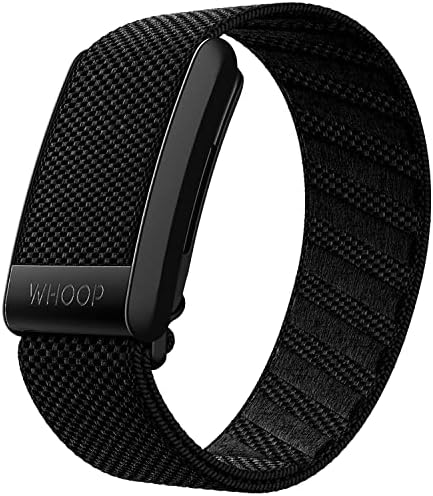
The WHOOP 4.0 takes a fundamentally different approach to fitness tracking, focusing exclusively on physiological data and recovery optimization rather than displaying the time or counting steps. This screenless wearable continuously monitors your body to deliver actionable insights into strain, recovery, and sleep, helping serious athletes and health enthusiasts optimize their performance.
Key Features:
- Continuous 24/7 physiological monitoring
- Strain Coach with real-time exertion tracking
- Recovery Score with daily readiness assessment
- Advanced sleep tracking with Sleep Coach
- HRV (Heart Rate Variability) monitoring
- Respiratory rate tracking
- Skin temperature monitoring
- Blood oxygen monitoring
- Stress monitoring with breathwork exercises
- Over 99% heart rate accuracy
- Waterproof battery pack for continuous wear
- 5-day battery life with on-the-go charging
- WHOOP Any-Wear apparel compatibility
- Community features and team comparisons
Pros:
- Industry-leading data accuracy and depth
- Recovery-focused approach optimizes training
- Screenless design means no distractions
- Wear in clothing, not just on the wrist
- Detailed strain tracking for any activity
- Extensive behavioral tracking and analysis
Cons:
- Requires ongoing subscription ($239/year included with purchase)
- No display means no time checking or notifications
- High total cost of ownership
- Steep learning curve for data interpretation
- No GPS tracking
- Overkill for casual fitness users
Best For: Serious athletes, biohackers, and data enthusiasts who want the deepest possible insights into their recovery, strain, and sleep to optimize training and performance.
Buying Guide:
How to Choose the Right Fitness Tracker
Types of Fitness Trackers
Fitness Bands: Slim, lightweight devices focused primarily on health and activity tracking. Examples include Fitbit Inspire 3, Xiaomi Smart Band 9, and Amazfit Band 7. These prioritize comfort and battery life over display size and smart features.
GPS Fitness Watches: Larger devices with built-in GPS for accurate outdoor tracking without a phone. Examples include Garmin Vivoactive 5 and Forerunner 55. Ideal for runners, cyclists, and outdoor enthusiasts.
Smartwatches with Fitness Focus: Full smartwatches that excel at fitness tracking. Apple Watch SE and Samsung Galaxy watches fall into this category, offering app ecosystems alongside health monitoring.
Screenless Trackers: Devices like WHOOP that focus purely on data collection without display distractions, designed for athletes prioritizing recovery optimization.
Key Features to Consider
Heart Rate Monitoring: All modern fitness trackers include optical heart rate sensors, but accuracy varies significantly between devices. Look for trackers with multiple LEDs and advanced algorithms for optimal performance during high-intensity activities.
GPS Tracking: Built-in GPS enables phone-free tracking of outdoor activities, providing accurate distance, pace, and route data. Connected GPS uses your phone’s GPS, which works well but requires you to carry your phone during workouts.
Sleep Tracking: Quality sleep tracking should include sleep stage detection (light, deep, REM), sleep score, and actionable insights. Some trackers offer smart alarms that wake you during optimal sleep phases.
Battery Life: This varies dramatically, from 18 hours (Apple Watch) to 21 days (Xiaomi Smart Band 9). Consider how often you’re willing to charge the tracker and whether you want to wear it during sleep.
Water Resistance: Most fitness trackers are rated 5ATM or 50m, meaning they’re safe for swimming. Check the specific ratings if pool or open-water swimming is important to you.
Display Type: AMOLED displays offer vibrant colors and excellent outdoor visibility. Always-on display options are convenient but reduce battery life.
Smart Features: Consider whether you need notifications, music control, contactless payments, or voice assistants. These features add convenience but may come at higher prices.
Form Factor Considerations
Wrist Comfort: If you plan to wear your tracker 24/7, including during sleep, prioritize slim, lightweight designs. Bulky sports watches may be uncomfortable for all-day wear.
Style: Modern fitness trackers come in various styles, from sporty bands to elegant smartwatches. Choose one that fits your lifestyle and wardrobe.
Band Options: Interchangeable bands let you switch between workout and everyday looks. Check band availability before purchasing.
App Ecosystem
The companion app is crucial to your fitness tracking experience. Consider:
Fitbit App: Excellent community features, challenges, and food logging. Premium subscription unlocks detailed insights and guided programs.
Garmin Connect: Comprehensive, free platform with training plans, detailed analytics, and no subscription required. Best for serious athletes.
Apple Fitness: Deep iPhone integration with Apple Fitness+ workout videos (subscription required). Best for Apple ecosystem users.
Samsung Health: Solid Android integration with comprehensive health tracking. Best for Samsung phone users.
Zepp App: Powers Amazfit devices with good data presentation, but it is less polished than premium alternatives.
Budget Tiers
Budget ($30-60)
At this price point, the Xiaomi Smart Band 9 and Amazfit Band 7 deliver remarkable value. You’ll get comprehensive health tracking, good displays, and excellent battery life. Trade-offs include connected (not built-in) GPS and less polished apps.
Our Pick: Xiaomi Smart Band 9 for its premium aluminum construction, 21-day battery, and comprehensive feature set.
Mid-Range ($80-$160)
This tier offers the best balance of features and value. The Fitbit Charge 6 stands out with built-in GPS, accurate heart rate tracking, and Google integration. The Fitbit Inspire 3 and Samsung Galaxy Fit3 are excellent for those who don’t need GPS.
Our Pick: Fitbit Charge 6 for its combination of built-in GPS, accurate tracking, and comprehensive health features.
Premium ($200-$300)
Premium trackers offer the most features and best build quality. The Garmin Vivoactive 5 excels for athletes, while the Apple Watch SE is ideal for iPhone users wanting full smartwatch capabilities.
Our Pick: Garmin Vivoactive 5 for its exceptional battery life, comprehensive fitness features, and no-subscription-required approach.
Elite/Specialty ($300+)
The WHOOP 4.0 is designed for serious athletes and biohackers seeking the deepest possible health insights. This subscription-based model isn’t for everyone, but it delivers unmatched data for those who use it.
Frequently Asked Questions
How accurate are fitness tracker heart rate monitors?
Modern optical heart rate monitors are generally accurate for resting and moderate-intensity activities, typically within 5-10% of chest strap readings. Accuracy can decrease during high-intensity exercise, especially in activities with significant wrist movement. The Fitbit Charge 6 and Garmin devices tend to perform best during intense workouts due to their advanced sensor arrays.
Do I need built-in GPS?
Built-in GPS is essential if you want to track outdoor activities without carrying your phone. For runners, cyclists, and hikers, this feature is valuable. If you always exercise with your phone or primarily work out indoors, connected GPS (using your phone’s GPS) works fine and saves money.
How long do fitness trackers last?
Most quality fitness trackers last 2-4 years with proper care. Battery capacity typically degrades over time, so a tracker that originally lasted 7 days might only last 4-5 days after two years. Software support varies by manufacturer, with Apple and Garmin typically providing the longest update windows.
Are subscription services worth it?
This depends on your goals. Fitbit Premium ($10/month) unlocks detailed insights, guided programs, and personalized recommendations that many users find valuable. Garmin Connect is completely free with no locked features. WHOOP requires a subscription but provides the most detailed analysis. Apple Fitness+ ($10/month) offers excellent workout videos, but it isn’t necessary for basic tracking.
Can I swim with my fitness tracker?
Most fitness trackers rated 5ATM or 50m water resistance are safe for swimming in the pool. However, check specific manufacturer guidelines, as some don’t recommend hot tub use or exposure to soaps and chemicals. Saltwater swimming may require more careful rinsing to prevent damage.
Which fitness tracker is most comfortable for sleep tracking?
Slim, lightweight bands like the Fitbit Inspire 3, Xiaomi Smart Band 9, and Garmin Vivosmart 5 are most comfortable for sleep tracking. Larger smartwatches can feel bulky at night, though many users adapt over time.
Do fitness trackers help you lose weight?
Research shows that fitness trackers can be effective tools for weight loss when used as part of a comprehensive approach that includes diet and exercise. Accountability, goal-setting, and data visibility help many users stay motivated and make better choices. However, a tracker alone won’t cause weight loss without behavioral changes.
Final Recommendations
Category | Product | Why |
Best Overall | Fitbit Charge 6 | Perfect balance of features, accuracy, and value with built in GPS |
Best Budget | Xiaomi Smart Band 9 | Premium features and 21 day battery at budget price |
Best for Runners | Garmin Forerunner 55 | Daily suggested workouts, PacePro, and 2 week battery |
Best for iPhone | Apple Watch SE (2024) | Seamless Apple ecosystem integration with safety features |
Best for Android | Samsung Galaxy Fit3 | Excellent display and features at affordable price |
Best for Athletes | Garmin Vivoactive 5 | Comprehensive training features with 11 day battery |
Best Value | Amazfit Band 7 | Alexa built in, 18 day battery, feature packed at $50 |
Affiliate Disclosure: Stem & Stone earns from qualifying purchases. Our recommendations are based on research and user feedback, not affiliate relationships.